SCP-8389
Information
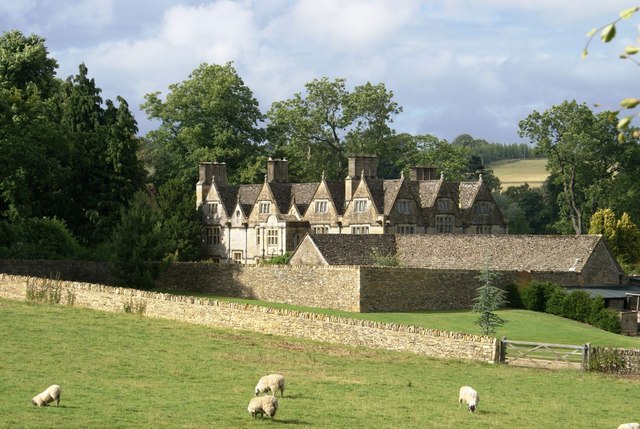
The exterior of the manor.
Author: DirEthan
Rating: 20/36
Created at: Sat Dec 13 2025
Ireland has a beautiful garden with a manor. Come visit sometime.
Special Containment Procedures
MTF Theta-4 “Gardeners” have been assigned to maintain a radius of 80.937 km around SCP-8389.
SCP-8389 is currently inaccessible to any Foundation staff sensitive to strong odors. Any Foundation staff wishing to visit SCP-8389 are advised not to come within 40 km of SCP-8389 during any transportation efforts by MTF agents.
Any member of the public who is discovered within the boundaries of SCP-8389 will be placed under arrest and questioned. Any members of the public affected by SCP-8389's hyperosmia or hallucinogenic effects will be administered Class-C amnestics.
Description
SCP-8389's angel trumpets3
SCP-8389 is the joint designation for a garden and the manor it is attached to, located in Killarney, Ireland.1 The manor is constructed of fortified Scots pine (Pinus sylvestris) timber walls and a quarried foundation, which is known to be built out of granite, limestone, and sandstone. The structure of the manor is also noted to have been overgrown with poison ivy (Toxicodendron Radicans). The manor also includes an encompassing garden that spans 48.622 km.
Enclosing the manor's exterior is the yew forest that spans 46.512 km. Within the forest features a garden filled with morning glories (Ipomoea purpurea) and angel trumpets (Brugmansia suaveolens). These blossoms produce a subtle influence on the afflicted individual’s hyperosmia. After further analysis, the Department of Botany discovered that SCP-8389's influence on normal individuals causes them to be hyperosmic towards the blossoms.2
The blossom's psychoactive alkaloids are known to affect an individual's mood, perception, and behavior. It is also noted that psychoactive alkaloids can also cause visual hallucinations for a 5-7 second period. An individual also may be affected by the blossom's volatile organic compounds.
Addendum
After further research, SCP-8389's blossoms are noted to release highly toxic tropane alkaloids.4
These blossoms, after releasing the highly tropane alkaloid, are known to [DATA INSUFFICIENT].5
Discovery Log
SCP-8389 was initially noticed by Researcher Janet Monroe on her car trip when she experienced dizziness while passing by the typical affected area of 40 km.
After noticing the anomalous behavior of the area, Janet followed proper Anomaly Reporting Protocol guidelines. After the protocol was approved by the O5-Council, a Standard Experiment Protocol was requested by Researcher Janet Monroe.
The request for a Standard Experiment Protocol was later approved by the Ethics Committee.6
Experimental Log
DATE
03/06/2007
Participating
Researcher Janet Monroe, Agent Buckeye, SGT Harper, and D-58
[The two MTF agents stood 6 feet away from the D-class as they observed].
[Silence filled the air before one agent spoke up as the D-Class refused to move].
Buckeye
Step closer to the flowers of SCP-8389, D-58.
D-58
I really don't want to, sir. [The D-class cupped their hands together as they huffed].
Buckeye
[Sigh], SGT. Harper, come over here and help me.
[Harper approached Buckeye as she looked at D-58].
Harper
I'll give you an hour without testing after, I promise.
D-58
[They pondered for a moment before slowly nodding as they spoke], Fair deal.
[D-58 turned around as they approached SCP-8389's flowers].
[D-58 grumbles for a moment as he stared down at the flowers; they fidgeted with their fingers].
D-58
What if they hurt me?
Monroe
They won't hurt you, D-58. [She paused for a moment before sighing], See if you can get a reaction from SCP-8389 by interacting with the flowers, D-58.
D-58
Sure. [They leaned down and began to touch the flowers].
[Monroe watched with interest as she began to note the interaction between D-58 and SCP-8389].
D-58
Am I done yet? [They stared at Monroe].
Monroe
[She sighed]. No, D-58.
[D-58 sighed before facing SCP-8389 as a couple of seconds passed, interacting with the petals more].
In order from when the D-Class interacted with SCP-8389
[SCP-8389 released a highly toxic tropane alkaloid to lure the D-Class closer in a five-second span. After the smell was released, the D-Class approached SCP-8389 closer].
D-58
I feel dizzy. [After a five-second span, D-58 tumbled to the floor].
Monroe
D-58?! [She attempted to rush over before Buckeye held her back].
Buckeye
Remain calm, Janet. [He continued to hold Janet back].
Monroe
You promised, nobody would get hurt today. [She snarled].
Buckeye
Promises die, Monroe. [He grumbled]. Now remain calm.
[Monroe went quiet as she watched the floor around where the D-class tumbled began to move].
Monroe
D-58? [She asked before, suddenly, the body of the D-Class was pulled deep into the ground].
Monroe
D-58! [She attempted to rush over again before Buckeye grabbed her tighter with his arm].
Buckeye
Remain calm, Monroe, I won't tell you again, [For a moment the both of them went silent before Agent Buckeye spoke up]. Reporting possible D-Class termination, observe further, copy.
[The radio went silent for a 4-second period before a voice was heard].
Lenny
Copy that, over.
Closing Statement
A ground-penetrating radar scan was scheduled for SCP-8389 to see if there was anything under the selected subsurface.7 Otherwise until further analysis is done, advise caution and wear proper PPE while walking through SCP-8389.
Ground-Penetrating Radar Scan
DATE
03/07/2007
[BEGIN LOG]
1200
The Ground-Penetrating Radar was set up by a Foundation personnel on the surface of where D-58 was last seen.
1230
After the Ground-Penetrating Radar was set up, a pulse of electromagnetic energy was shocked into the ground, allowing an analysis to be made of what was underground.
1335
After analysis, the images were sent over to the Department of Botany at Site-102.
Closing Statement
After further investigation by Site-102's Department of Botany, it has been discovered that parts of SCP-8389 had become an underground root system of multiple branches of roots, one encasing a figure in the middle of the root system.
No further investigations must be made, as SCP-8389 may pose a threat to personnel on site.
Additional Note
Dr. Kim Philips,8 and Dr. Coleman,9 jointly presented the following hypothesis.
SCP-8389's seeds are larger compared to sample angel trumpet (Brugmansia suaveolens) and thale cress (Arabidopsis thaliana) seeds.10
After the following hypothesis was published by Dr. Kim Phillips and Dr. Coleman. The Foundation's Department of Botany assembled all the data from SCP-8389's seeds and compared them to non-anomalous trumpet plants and thale cress plants. The Foundation’s Botany team used a mix of common angel trumpet's, thale cress for testing.
Additional Note

Close up of one of SCP-8389's flowers.12
After a brief period of 5-7 days and approval by the Ethics Committee, personnel from Site-102 were asked to explore the garden for any further anomalous effects based on the hypothesis.
SCP-8389's seeds
SCP-8389's seeds are typically around 5-6 millimeters long with around 6-4 millimeters in diameter.
These seeds propagate fast, dropping at a rate of around 10 seconds per flower.
Protocol
SCP-8389's flowers are to be removed from the garden and any surrounding ground it may have placed itself in. A root cluster removal is recommended for easier biowaste storage.
Any personnel willing to interact with SCP-8389 within proper protocol are required to wear PPE.13
Regular Seeds
Regular seeds are typically around 3-4 millimeters long with around 5-4 millimeters in diameter.
These seeds propagate more slower, dropping at a rate of around 3-7 days per flower seed.14
Protocol
Regular seeds are to be put back in their original packaging to ensure no crossing of SCP-8389's seeds occurs during treatment.
Addendum
Further testing on SCP-8389 cannot be held due to financial worries. The O5-Council has requested any personnel to stop testing until financial support is administered by [DATA EXPUNGED]15
Unless otherwise stated, the content of this page is licensed under Creative Commons Attribution-ShareAlike 3.0 License.